Wednesday, February 17, 2016

New Literary Agent Alert: Kemi Faderin of Dystel & Goderich Literary

By: Unknown On: 3:59 AM
  • Share The Gag
  • ReminderNew literary agents (with this spotlight featuring Kemi Faderin of Dystel & Goderich Literary Management) are golden opportunities for new writers because each one is a literary agent who is likely building his or her client list.

    kemi-faderin-literary-agent

    About Kemi: Kemi Faderin joined DGLM as an intern while pursuing her M.S. in Publishing at NYU. She grew up in Ellicott City, Maryland where she went to college and received her B.A. in English. Shortly after graduation, Kemi moved to New York in early 2015. An internship at Liza Dawson Associates solidified her interest in a career in the publishing industry, especially the agenting side of it. Find her on Twitter.
    Screen Shot 2015-08-16 at 1.10.02 AM
    The biggest literary agent database anywhere
    is the Guide to Literary Agents. Pick up the
    most recent updated edition online at a discount.
    She is seeking: She is interested in anything different and original, but especially in smart, plot-driven YA, historical fiction / nonfiction, contemporary women’s fiction, and literary fiction.
    How to Submit: E-query kfaderin@dystel.com. “Synopses, outlines or sample chapters (say, one chapter or the first 25 pages of your manuscript) should either be included below the cover letter or attached as a separate document. We won’t open attachments if they come with a blank email. Please do double space your samples for reading that’s easy on the eyes! We will respond to most query letters within a six to eight week period. If you don’t hear from us within that time frame, chances are we did not receive yours. Feel free to resend it.”

    First published- http://www.writersdigest.com/editor-blogs/guide-to-literary-agents/new-literary-agent-alert-kemi-faderin-of-dystel-goderich-literary

    The Brighton Prize 2016 is open

    By: Unknown On: 3:52 AM
  • Share The Gag
    • £500 first prize.
    • £900 total prize fund.
    • Prizes for short stories and flash fiction.
    • Open to entries from writers based anywhere in the world.
    • Closing date 10th June.

    Interested?

    We’d like flash fiction up to 350 words, and short stories of 1-2000 words.

    Short story prizes:

    Winning short story: £500
    Two runners up: £100 each.
    Local prize (for a writer resident in Sussex: £100 book token.

    Flash fiction prizes:

    Winning flash fiction story: £100
    Two runners up: £50 each.

    Highly commended stories:

    We’ll also recognise some of the best shortlisted stories that don’t quite make the list of prizewinners.

    Entry fees:

    £8 for short stories
    £6 for flash fiction.

    The authors of all prizewinning and highly commended stories will be offered publication in the next Rattle Tales anthology.

    What is the Brighton Prize?

    The Brighton Prize is an annual short story prize run by Rattle Tales, Brighton’s interactive live literature night.
    We started the prize in 2014 because we want to find exciting, challenging new writers, and bring their work to the Brighton stage.

    What is Rattle Tales?

    rattle tales at the brunswickWe are Brighton’s interactive live literature night.
    We put on regular shows in Brighton, in which new and established writers are given the chance to perform their work and discuss it with the audience. There are rattles to shake, friendly debate and good vibes.
    We  regularly play to packed houses at theBrunswick in Hove, and beyond. We ran the short story slam at Charleston House’s Small Wonder Festival in 2013 and 2014. We’ve put on a bespoke show in Noyelles sur Mer in France, and we were part of the 2013 Green Man Festival.
    We’re spoken word with a difference: part stage performance, part lively writing workshop and part night in the pub.
    You can see what a Rattle Tales night looks like here.

    Read more- http://www.brightonprize.com/

    Wednesday, February 3, 2016

    A Review of "Season of Crimson Blossoms” written by Abubakar Adam Ibrahim

    By: Unknown On: 3:53 AM
  • Share The Gag

  • Reviewed by Joseph Omotayo
    Season of Crimson Blossoms grippingly depicts the vagaries of life. It bares realities and its intricacies. It examines the moral rules we live by. Humanity could be confusing; the same rigid laws that guide us, snuff us out. In the manner characteristic of Victorian literature, Abubakar Adam Ibrahim explores a puritanical society. Interestingly, he portrays well the fragile veneer masking strict morality. The society portrayed in Season of Crimson Blossoms is typical of Nathaniel Hawthorne’s The Scarlet Letter. Binta Zubairu and Hester Prynne share a striking similarity in their woes. This is how a puritanical society works: freedom is rejected for adherence; practicality is celebrated over sheer pleasure; the human will is heavily influenced by prescriptive religious mores. With that prescriptiveness, society turns against itself in its constant moralistic sanitization. Humanity is seen striving for divinity, and there lies the evil that ravages it. Humanity is humanity. The Supernatural is the Supernatural. When humans long to be preternatural, many things give. In Season of Crimson Blossoms, Binta Zabairu gives; Hassan ‘Reza’ Babale gives, and everything that surrounds their stormy relations.

    The novel is the story of love (lust?) in unexpected places. Like life, other things follow this. Binta is at the centre of a complex commotion that trudges to a dampened climax. In Binta’s self realisation, she constantly battles with her society. Nobody wins an African society easily. Ask Ezeulu in Chinua Achebe's Arrow of God. An African society heavily relies on the Ubuntu philosophy where personhood is only realized in communality. You are nothing outside the approval of your society. Binta breaches societal and religious norms, and the consequences are overwhelming. Beyond the travails Binta suffers and the boisterousness of San Siro are Nigerian politics and the consequent ethnic-religious crises. There is Senator Buba Maikudi, a roguish politician oozing grimes and candies from the same side of the mouth.  The book uses riveting yet subtly dark humour to capture the entity called Nigeria.  Yaro’s, Zubairu’s, and Fai’za’s parents’ lives serve as a counter-narrative to popular perspectives on the many ethnic-religious crises in the North. Season of Crimson Blossoms is a complete debut of everything wrecking a closely knitted society as ours. Above all, it lauds an individual’s will to rise above the conventional. Binta wills freedom here:

    “She wanted it to be different. She had always wanted it to be different. And so when he nudged her that night, instead of rolling on her back and throwing her legs apart, she rolled into him and reached for his groin. He instinctively moaned when she caressed his hardness and they both feared their first son, lying on a mattress would stir.
    What the hell are you doing? The words, half-barked, half whispered, struck her like a blow. He pinned her down and, without further rituals, lifted her wrapper. She turned her face to the wall and started counting. The tears slipped down the side of her closed eyes before she got to twenty.” (pg. 54)
    The above is not just sex. A woman’s soul is being gruesomely wrenched off. Sex in her home is following through duteous motions. One would have to understand the kind of society Binta is in to well appreciate the bravery Binta summons there, as she mounts her husband. Hers is a society driven by strict religious dicta: a society that normalizes the objectification of women; a society where you fuck your wife and she does this:

    “When he’s done, always put your legs up so his seed will run into your womb.” (pg. 51)
    You will cry here. No wetness. No pleasure. And Zubairu, Binta’s husband, just rams her on:

    “…when he was tossing and turning on the bed next to her, she knew he would nudge her with his knee and she would have to throw her legs open. He would lift her wrapper, spits into her crotch and mount her…She would count slowly under her breath, her eyes closed…And somewhere between sixty and seventy – always between sixty and seventy – he would grunt, empty himself and roll off her until he was ready to go again.” (pg. 53-54)
    I love the way language is used in this book. Abubakar Adam Ibrahim’s use of language impresses. In fact, before you get yourself into the story, language hooks you first. In showing the way Binta breaks free, Abubakar Adam Ibrahim paints it well here: 

    “Hajiya Binta Zubairu was finally born at fifty-five when a dark-lipped rogue with short, spiky hair, like a field of miniscule anthills scaled her fence and landed, boots and all, in the puddle that was her heart.” emphasis mine (pg. 3).
    You will love the poeticity of his language. Meanings are compressed and left to swell in your mind. Check this:

    “After growing wings through indiscretion, Hajiya Binta, contrary to her expectation, did not transform into an eagle, but an owl that thrived in the darkness in which she and Reza communed.” (pg. 123)

    My favourite in the book is how this everyday teenage act is simply shown:

    “…the girl was already up, wiping sleep from her eyes with a cotton ball dipped in facial cleanser.” (pg. 33)
    Everything in this novel reflects the postcolonial. I like this. The postcolonial always aims to deconstruct and break hegemony of discourses. Characters in this book de-stereotype societal held norms. There is a subtle attack on societal negative ancientness. Binta breaks Patriarchal power in many ways. An instance is the way she perpetually scorns Mallam Haruna’s proposition. Characters triumph in their complexities to challenge pigeonholing. Reza may be a street rogue and bestial political tool, however, the orderliness he enforces in San Siro shows an unconventional intellect at play. The lord of San Siro, a place where street scums trade in the illegal, Reza’s humanity shines off nevertheless. His soft spots for Binta and his familiar trauma are the two sides of him he struggles to manage.

    However, some of the many deconstructions in this book are not without their faults. In the overreaching attempt to stab stereotypes, Abubaka Adam Ibrahim seems to desperately over essentialise characters and incredulity stings you in the face. Some characters in this book shove unbelievable intellects into your face. The book takes it far when Reza sees the need to get Leila a book while in his captivity: 

    “I found this on my way back yesterday at a second-hand bookseller’s. I thought you could do with something to read. Keep you company, you understand?” (pg. 284)
    It is Reza! Not Fai’za and her friends, who we know to love books. I find the passion Binta shows towards literary works unnatural. I see it as a belaboured attempt to elevate this character into something she is not. This is an imposed intellection, another place where deconstruction terribly fails. Consider this:

    “While dusting the small pile of books shelved on the little cupboard in the corner, her eyes fell on Hemingway’s The Old Man and the Sea. But Binta picked out a Danielle Steel novel instead and tossed it on the couch…” (pg. 34)
    At a time in the book, she is seen philosophising about the old man’s struggle at sea, relating it to her own life. That part of her marvels me! What an intellectual!

    You should read Season of Crimson Blossoms. There are so many things to love the book for.


    First published by Critical Literature Review

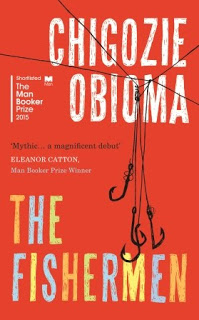
    “The Fishermen” by Chigozie Obioma; reviewed by Joseph Omotayo

    By: Unknown On: 3:46 AM
  • Share The Gag
  • Two things upset life for the Agwu’s family: the temporary absence of the “Guerdon” man and a superstitious anxiety. The Fishermen is a witty book, it makes sorrow almost a pleasurable thing to read. This novel is a receptacle of the gnashing ruins that nearly wipe out a family. The tragedy here is a bleeding one. Pages gush with unimaginable sorrows. With an elegant simplicity, Chigozie Obioma narrates a woe all at once terrible and vivid. With vivacious expressions sharply fleshing out images, the reader is inured to misfortunes. You are pulled into a participatory reading of the text. The Fishermen’s chic use of words entices the reader. In a way that smacks of Oscar Wilde’s The Picture of Dorian Gray, Chigozie Obioma creates beauty and shreds it. This book elaborates a quotidian family life interspersed with the fragile political tensions of the 1990’s. This is majorly the story of four brothers soused in fleeting joys and suffusive griefs. 

    In a clearly portrayed 1990s, Ikenna, Boja, Obembe and Benjamin, all brothers, turn fishermen of fishes, hope, and disaster. Their childhood is battered repeatedly and adulthood soon steals on them. At Omi-Ala, they draw evil home. The turbulence that wracks their household creates a million stories for the reader’s delight. Flashbacks and foretelling chapter titles mix well in this book. Chapter titles like Fishermen, Sparrow, Locusts, and Fungus are suggestive of impending issues. The Fishermen blends the superstitious with the cultural. Everything you take away from the book is subjected to your belief. Life’s checkered nature is wicked as it bites hard on these brothers. This book is a quiver of memories, if you witnessed the full cycle of the ‘90s, memories of those times will flush you as you read. The Fishermen packs enough of infantile gimmickries and mischiefs to double you up. I could see bits of myself in the childhood of these fishermen; in their pranks and wits. My mother would never know (except she read this) why money charged for grinding pepper kept soaring each time she sent me and my sibling to the grinder. The surcharge paid for our stay at game houses. If you never played SEGA game console, your childhood needs to be reconstructed. Trust me. Your childhood is bland. This sent me chortling silly:

    “After this fight, we got tired of going outdoors. At my suggestions, we begged Mother to convince Father to release the console game set to play Mortal Kombat, which he seized and hid somewhere the previous year after Boja – who was known for his usual first person in his class – came home with 14th scribbled in red ink on his report card and the warning Likely to repeat. Ikenna did not fare any better; his was sixteenth out of forty and it came with a personal letter to Father from his teacher, Mrs Bukky. Father read out the letter in such a fit of anger that the only words I heard were ‘Gracious me! Gracious me!’… He would confiscate the games and forever cut off from the moments that often sent us swirling with excitement, screaming and howling when the invisible commentator in the game ordered, ‘Finish him’, and the conquering sprite would inflict serious blows on the vanquished sprite by either kicking it up to the sky or by slicing it into a grotesque explosion of bones and blood. The screen would then go abuzz with ‘fatality’ inscribed in strobe letters of flame. Once, Obembe – in the midst of reliving himself – ran out of the toilet just to be there so he could join in and cry ‘That is fatal!’ in an American accent that mimicked the console’s voice-over. Mother would punish him later when she discovered he’d unknowingly dropped excreta on the rug.” (pg. 15)

    This book could make for a good literary feminist reading. The frail place of women in the society, how they are subalterned, how they are made as the other, is subtly spread across the book. Women characters in the book seem lopsided and almost unintelligent. Things slip off them before they even know. The character of Mother is interesting. For someone who seems to “own copies” of her children’s “minds” (pg. 103), she seems not to be as vigilant as such. She is only fully realized in the presence of Father. Her maternal vigilance falls apart with his momentary absence. There is Iya Iyabo too, a gossip, someone who fits well into your stereotypical construction of a fish wife. This was in the ‘90s. This makes for an interesting study of women and their roles across ages. Was your ‘90s filled with these types of women or not? You could even do a brief study of women in the society from the ‘90s till now, and see if anything has really changed. Doing a literary feminist criticism of this book will then be critically assessing that aspect of feminist theory which Toril Moil calls the ‘feminine’ aspect as opposed to the ‘feminist’ phase of gender criticism. This ‘feminist’ aspect she calls a political position (see Peter Barry’s Beginning Theory, 2nd ed.). Feminine reading of the text will be exploring “a set of culturally identified characteristics” of women and see if women’s place in the society as portrayed in this novel has not been exaggerated or understated.

    In a flush of thick mishaps, events in this book follow after the law of causality. This calls David Hume’s “Necessary Conjunction” to mind, the way minds are copies of experiences (see David Hume’s An Enquiry concerning Human Understanding). Causality says the human minds run in a tight chain of causes and effects. By experience, we habitually give ready conclusions to things. If A happens, then we know B will necessarily follow. This curious case of automatic relation of things and events deepens the tragedy in The Fishermen. People’s experiences with the crazed yammering of Abulu make Abulu a god. Even the supernatural seems to be at a loss on how to deal with Abulu. Ikenna is driven sore and begins providing conclusions to Abulu’s utterings. Even their educated Father falls prey to this automatic relation of events. It is just human to necessarily conjunct related events. This is the way our society is built. Chigozie Obioma takes us to that tender territory of our psyche and how it affects our lives and communities.

    I love this book! Editors of this book did something sterling. I could not find a sentence out of place. The use of punctuations marvel you. Words jump out of the book and pull you in. You can feel their hands on you. This is editing at its best. I love The Fishermen.

    First published by Critical Literature Review

    Monday, February 1, 2016

    DR. ISIAKA ALIAGAN @ 50 LITERARY COMPETITION

    By: Unknown On: 6:23 AM
  • Share The Gag
  • As part of activities marking the 50th Birthday Anniversary of Dr. Isiaka Aliagan, a Golden Jubilee Publication featuring academic papers, literary reviews, articles and creative works (poetry and short story) is planned.
    The Dr. Isiaka Aliagan Golden Jubilee Committee hereby invites interested Nigerian writers to submit entries for the literary competition and publication (Poetry and Short Stories)
    Selected works will be published in the Golden Jubilee Publication scheduled for release in May 2016 while some selected works will receive prizes and certificate of merit during a brief ceremony in May (actually date to be communicated.
    PRIZES & GUIDELINES
    Poetry Category:
    1st Prize (N30,000) 2nd Prize (N20,000) 3rd Prize (N10,000)
    - Poets can submit any three poems of their choices on varying themes
    - Entries should be submitted as a single document in an attachment with the poets' contact details at the foot of the page
    - Entries must be the original work of the entrants, not previously published in any anthology or ezines etc
    Short Stories Category:
    1st Prize (N50,000) 2nd Prize (N20,000) 3rd Prize (N10,000)
    - Short stories should be a minimum of 1000 ans maximum of 5000 words
    - Stories must be the original work of the entrants
    - Stories must not have been previously published
    send your entries to iyzugodpenhouse2000@yahoo.com or jesad007@yahoo.com on or before FEBRUARY 29, 2016
    WHO IS ISIAKA ALIAGAN
    He is a man of many colours; admired for his ardent steadfastness, uprightness and humility; revered for his academic prowess, creative panache and professional excellence. He is a consummate journalist, public relations veteran, teacher,writer, editor. He is Dr. Isiaka Zubair Aliagan.
    Beyond the confines of career in journalism, media relations and academics, Dr. Isiaka Aliagan,has been to many, a mentor, motivator and inspiration. Now, it is time to call for garlands as we celebrate the man who has meant a lot many people; to honour the man as he approaches the milestone of 50 years; a golden jubilee on earth, worth celebrating for its steady footprints on the sands of time.
    Goodluck!!!

    Tuesday, January 19, 2016

    Call For Submission: An Anthology of Poetry in Honour of Professor Oloruntoba Oju at 50

    By: Unknown On: 8:06 AM
  • Share The Gag
  • As part of a series of activities marking Professor Omotayo Oloruntoba-Oju's 50th birthday, we are currently seeking poems that celebrate her ideological vision, commitment, and consistency, her vibrant contributions to the critical reception of African and African Diaspora Literature, and her selflessness in transforming lives in the academia. We will appreciate poems that are rooted in African oral tradition, postcolonial politics and democracy, freedom, justice, love, and gender issues. The basic rules for submission include the following:
    1. Language: English only
    2. Each poem submitted must not be more than 50 lines
    3. No more than three poems can be submitted
    4. Indicate appropriately when and where first published, in case the poem(s) submitted have previously been published
    5. Provide brief biographical information about yourself
    6. Poems submitted must be original as plagiarized poems will be disqualified
    7. All contributions should be sent to tayoojuatfifty@gmail.com
    8. The deadline for all submissions is March 30, 2016.
    The anthology will be co-edited by Sola Owonibi and Daniel Ajayi, both of the Department of English Studies, Adekunle Ajasin University, Akungba-Akoko.
    Professor Omotayo Oloruntoba-Oju teaches in the Department of English Studies, Adekunle Ajasin University, Akungba-Akoko, Ondo State, Nigeria. With close to three decades of teaching literature at University of Ilorin and Adekunle Ajasin University, Akungba-Akoko, Professor Omotayo Oloruntoba-Oju’s several academic papers straddle African Drama & Cinema, Caribbean Literature, African American Literature, among others. As the pioneer and current Director of Ajasin Varsity Theatre (AVT), she has equally directed a number of Convocation plays for the institution, some of which include Once Upon Four Robbers, Morountodun, Esu and the Vagabond Minstrels, all by Femi Osofisan, Aikin Mata (The Lysistrata of Aristophanes), translated and adapted by T.W. Harrison and James Simmons, and Ola Rotimi’s Kurunmi. Besides these, she has to her directorial credits many Command Performances and other theatre productions, some of which include Wole Soyinka’s TheTrials of Brother Jero & The Lion and the Jewel, Rasheed Gbadamosi’s Behold My Redeemer, Femi Osofisan’s Birthdays Are Not for Dying & A Restless Run of Locusts, Ola Rotimi’s Our Husband Has Gone Mad Again, Grip Am The gods are not to blame, Wale Ogunyemi’s Eniyan, Ahmed Yerima’s Ajagunmale, Zulu Sofola’s Tales by Moonlight etc. A former Head of Department of English Studies at Adekunle Ajasin University, Prof. Oloruntoba-Oju is a member of Association of Nigerian Authors.

    Monday, January 11, 2016

    IYIN NLA RESURRECTS IJALA AND APALA GENRE OF YORUBA MUSIC IN A GOSPEL ALBUM BY AKIN OGUNDOKUN aka WINRINWINRIN

    By: Unknown On: 5:53 AM
  • Share The Gag

  • Album title: Iyin Nla
    Artiste: Akin Ogundokun aka Wirinwirin
    Year: 2016
    Reviewer: Olutayo Irantiola

    Different genre of Yoruba music has been relegated to the background; some of which include Ijala (the hunter’s song) and Apala, but there are some exceptional people like Akin Ogundokun popularly called Wirinwirin have taken time to study and come up with a gospel album using these genres.

    The 45 minutes album with 6-track opened with an Ijala track that extols God and thereafter prayed for a meaningful life. The second track, which is the longest in the album, is also full of praises with original songs; he spiced the track with well known choruses in English, Igbo and Pidgin that he sang in with Apala. The third track is about the greatest gift that nature bestows on anyone which is a child; it is equally a prayer for those praying for the fruit of the womb.

    The fourth track of the album is very creative in its mix of Yoruba and English words with a Yoruba hymn in Apala. The fifth track is a prayer for all categories of road users: pedestrians, riders and all automobiles drivers. The sixth and the last track is for his alma mater, Obafemi Awolowo University, the leadership of the institution, as at the time of going to the studio, his lecturers and his fans.  This album equally gives rise to the Apala variant of the school anthem.

    As a whole, the album is full of lyrical rhythms typical of the Yorubas and prayers which everybody desires. Each track is peculiar and different people would easily identify with it. The music compilation is ingenious and engaging. This album is a revival of the genres that people have missed for some years because many gospel artistes have not excavated cultural genres and present it to people of our age in an appealing form. Kudos to Akin Ogundokun for serving us this lyrical ‘meal’ for consumption at this point which is a sequel to his first album.

    11th January 2016